Complete Guide to Creating Seamless Patterns from Text

Before diving into pattern creation, let's understand what makes a pattern "seamless." A seamless pattern is a design that tiles perfectly – when repeated side-by-side or top-to-bottom, it creates an infinite, continuous design without visible seams, breaks, or awkward transitions at the edges. This seamless quality ensures your designs look professional and polished across any application creating visually harmonious results that scale infinitely.
The From Text tool transforms your text descriptions into these seamless, repeating all-over prints for textiles, wallpapers, products, packaging, and both digital and print applications. Whether you need florals, geometrics, or abstract art, you can create professional-quality patterns in minutes – all royalty-free and uniquely yours. However, it's crucial to understand that our model is specifically designed for repeating designs, not standalone illustrations, one-off images, or logos (though you can incorporate logos into patterns using our From Elements tool). The tool also doesn't create sewing patterns or technical garment templates – it focuses exclusively on decorative, tileable designs that repeat infinitely.
How to Write Effective Prompts
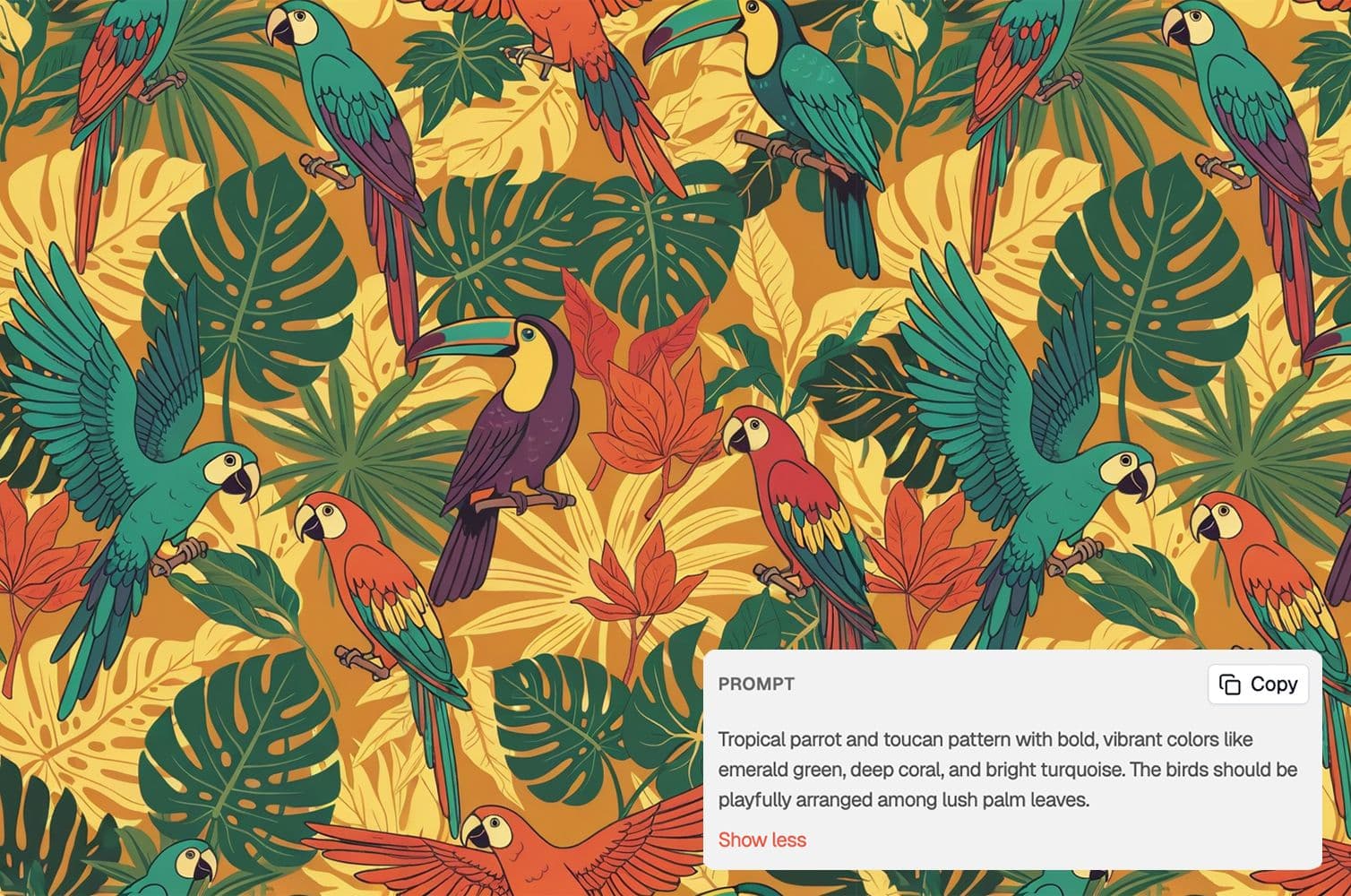
Unlike conversational AI tools, From Text generator responds best to descriptive language rather than instructions. Think of it as painting a picture with words rather than giving commands.
Examples of a descriptive language:
- "Tropical parrot and toucan pattern with bold, vibrant colors"
- "Blue wildflowers scattered across white"
- "Playful cats in various poses"
Note: While mentioning "pattern" or "seamless" won't harm your results, it's unnecessary since that's what the tool creates by default.
A. The Foundation: Core Subject & Style
Start with the basics – what do you want to see?
1. Core Subject (Keep it simple initially)
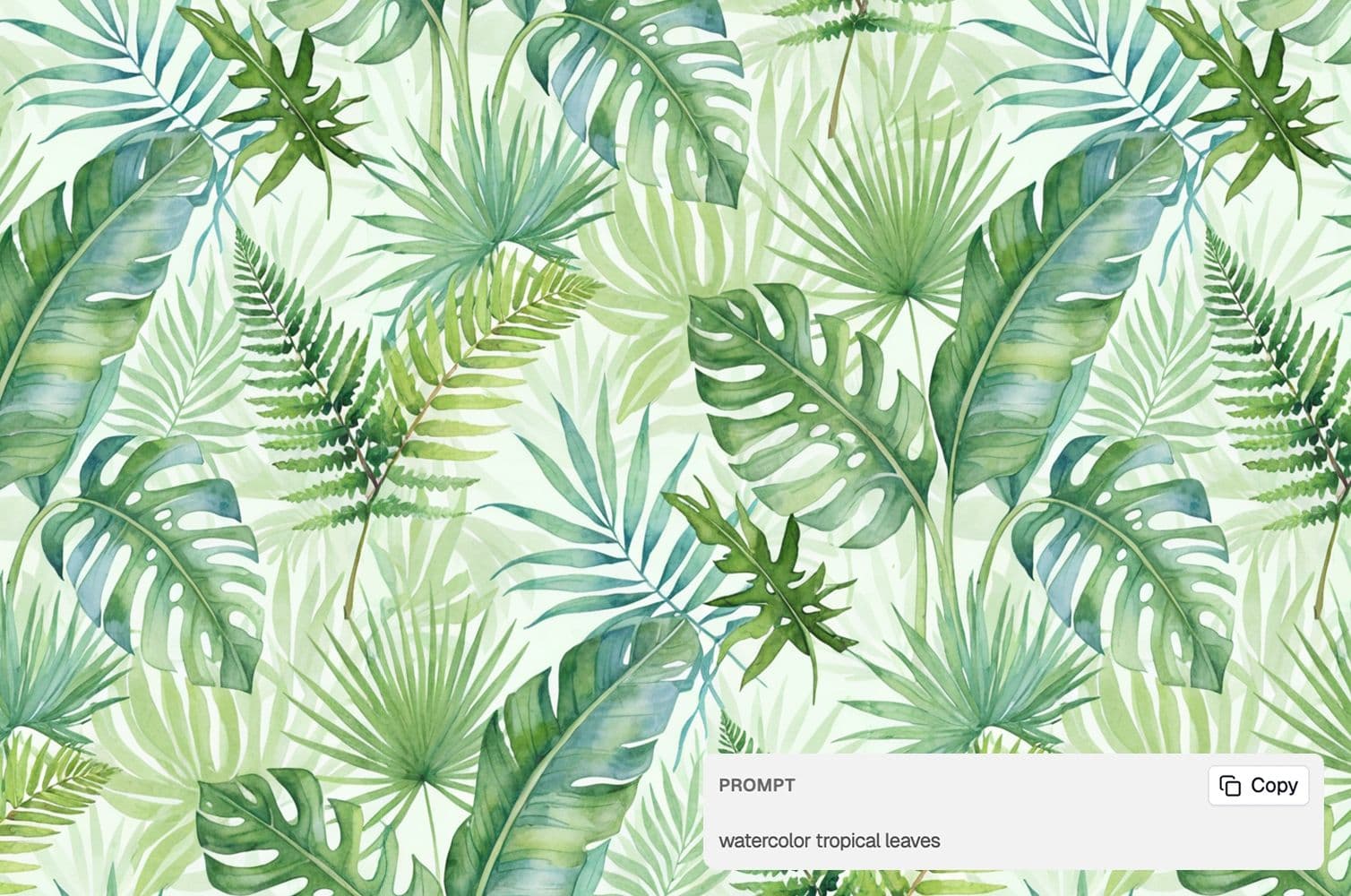
- "Tropical leaves"
- "Geometric triangles"
- "Coffee cups and beans"
2. Define Your Aesthetic (Can be described in a prompt or selected via preset system styles)
- "Watercolor botanical"
- "Art Deco geometric"
- "Minimalist line art"
- "Retro 70s flowers"
B. Detailing the Design: Specificity is Key
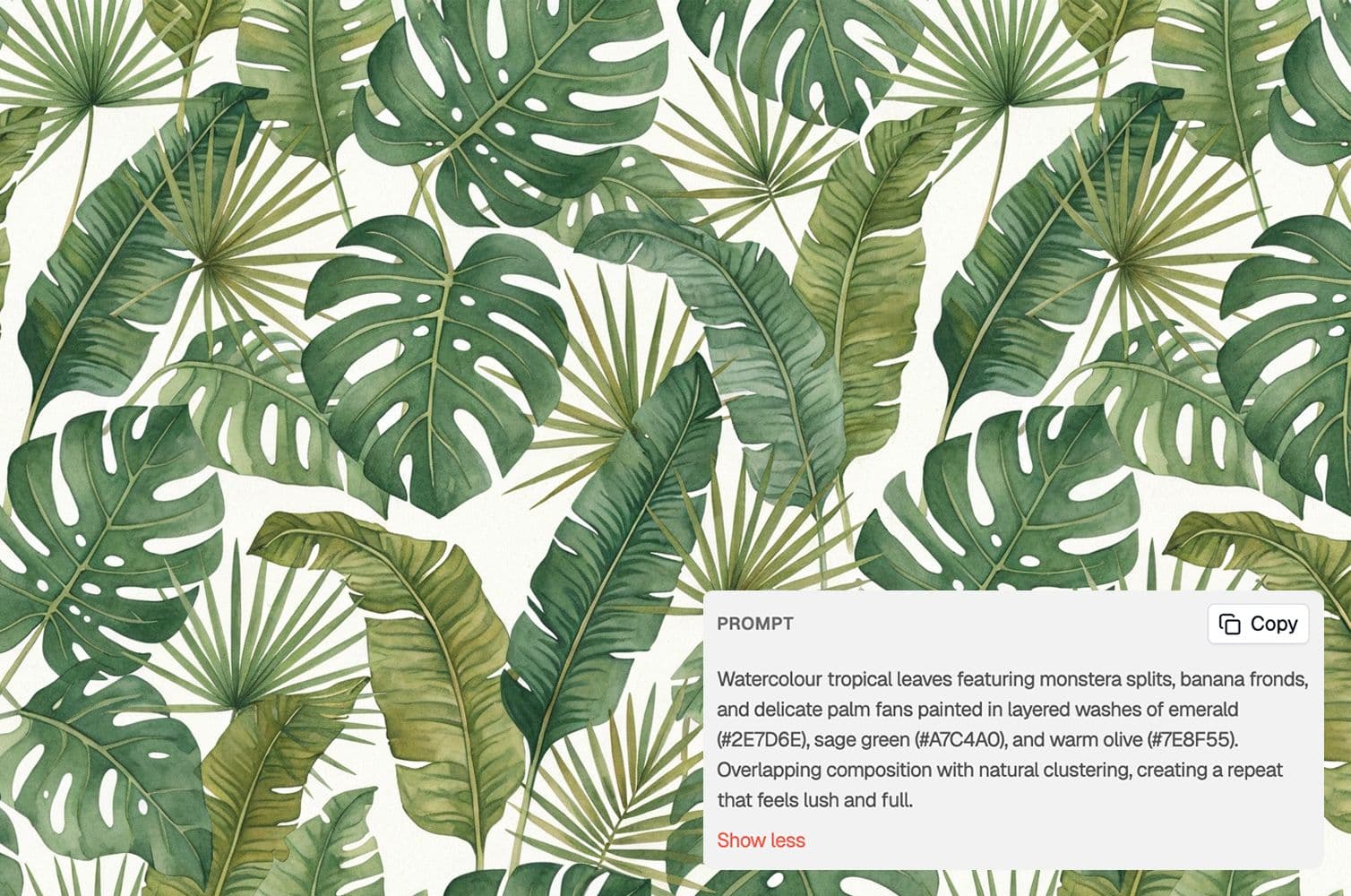
Once you have your foundation, add layers of detail:
1. Elements & Specifics
- What exact objects/shapes? "Roses, peonies, and eucalyptus leaves"
- Any special features? "With gold accents" or "featuring dewdrops"
2. Color Guidance
There are two ways to control colors when creating patterns from text.
You can describe colors directly in your prompt, from broad directions like “warm autumn palette” or “soft pastels” to more specific shades. This gives the AI more freedom to interpret your color direction.
For more precise control, use Custom Color Palettes. Choose from preset palettes, create your own using HEX codes, or import an existing palette from Adobe Illustrator, GIMP, Sketch, or Procreate. This is especially useful when working with brand colors, established collections, or a specific color story.
Tip: If you select or upload a custom Color Palette, avoid describing colors in the prompt, as the instructions may conflict. When creating a palette with HEX codes, specify how each color should be used — for example, cream background, red flowers, dark green leaves, yellow details.
3. Arrangement & Density
By default a lot of patterns follow grid-like layout with even negative space. You can override this by adding instructions like "Dynamic composition, no rigid grid layout" to your prompt. You can further influence your pattern by mentioning spacing (for example, adding "Densely packed" vs "Sparse, scattered elements"), layout ("Overlapping elements" vs "Evenly spaced") and scale ("Tiny delicate motifs" vs "Large bold elements").
The more specific your description, the closer the generated pattern will align with your vision.
4. Choosing a Pattern Repeat Type
With our Create From Text tool, you can guide not only the motifs, colors and style of your pattern, but also how those elements are arranged across the repeat.
Simply include the repeat type you want directly in your prompt. To show how much this can change the result, we tested the same simple idea using eight different pattern repeat layouts:
“Small white flowers on a black background, [repeat type] repeat.”
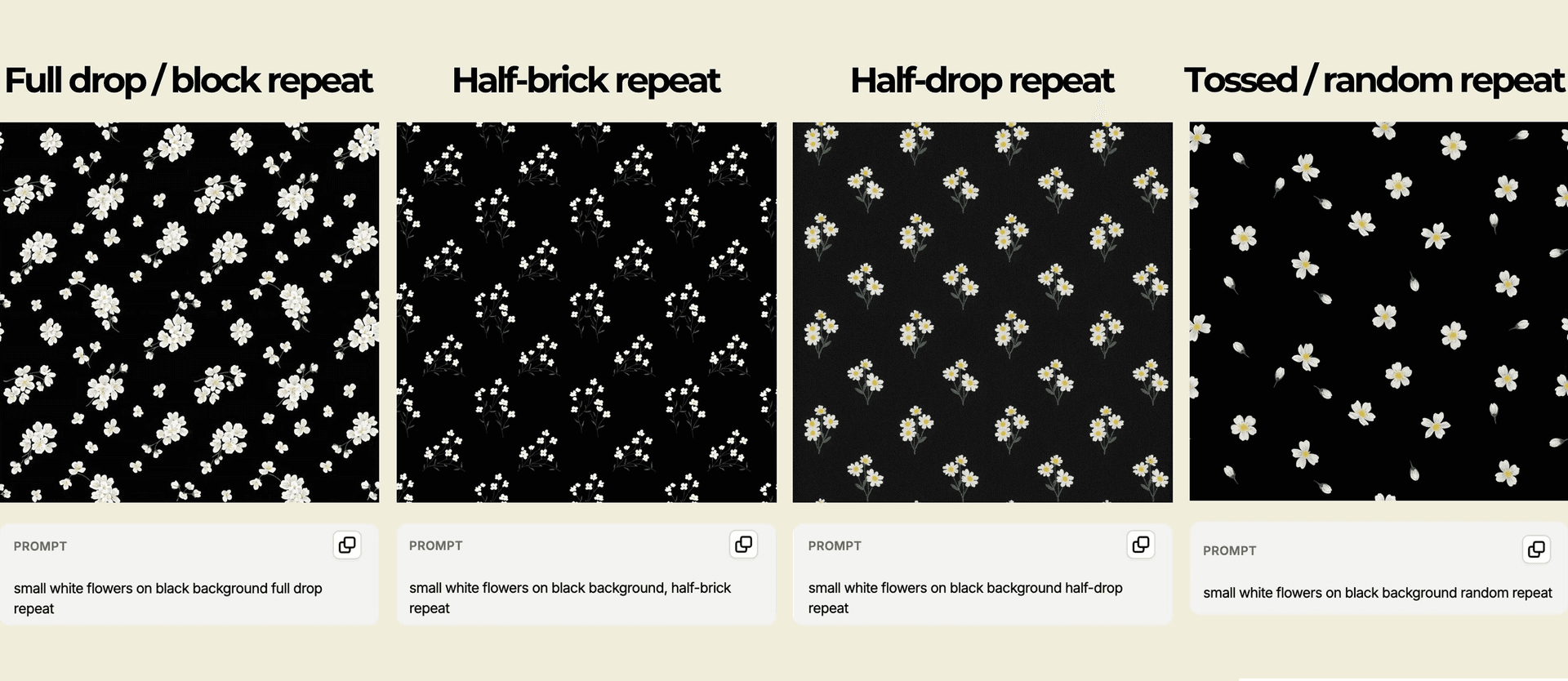
Here are some repeat types you can try:
- Full drop / block repeat — motifs align directly above and beside each other, creating a regular, structured layout.
- Half-brick repeat — each row is offset horizontally, similar to traditional brickwork.
- Half-drop repeat — each column is offset vertically, creating a more flowing arrangement.
- Diamond repeat — motifs are arranged within a repeating diamond-shaped structure.
- Ogee repeat — elements follow interlocking curved shapes, creating an elegant, decorative rhythm often seen in traditional textiles and wallpaper.
- Scallop repeat — motifs follow overlapping curved or fan-like rows.
- Stripe repeat — elements are arranged into clear vertical, horizontal or directional bands.
- Tossed / random repeat — motifs are scattered in varied positions and directions for a more organic, less structured composition.
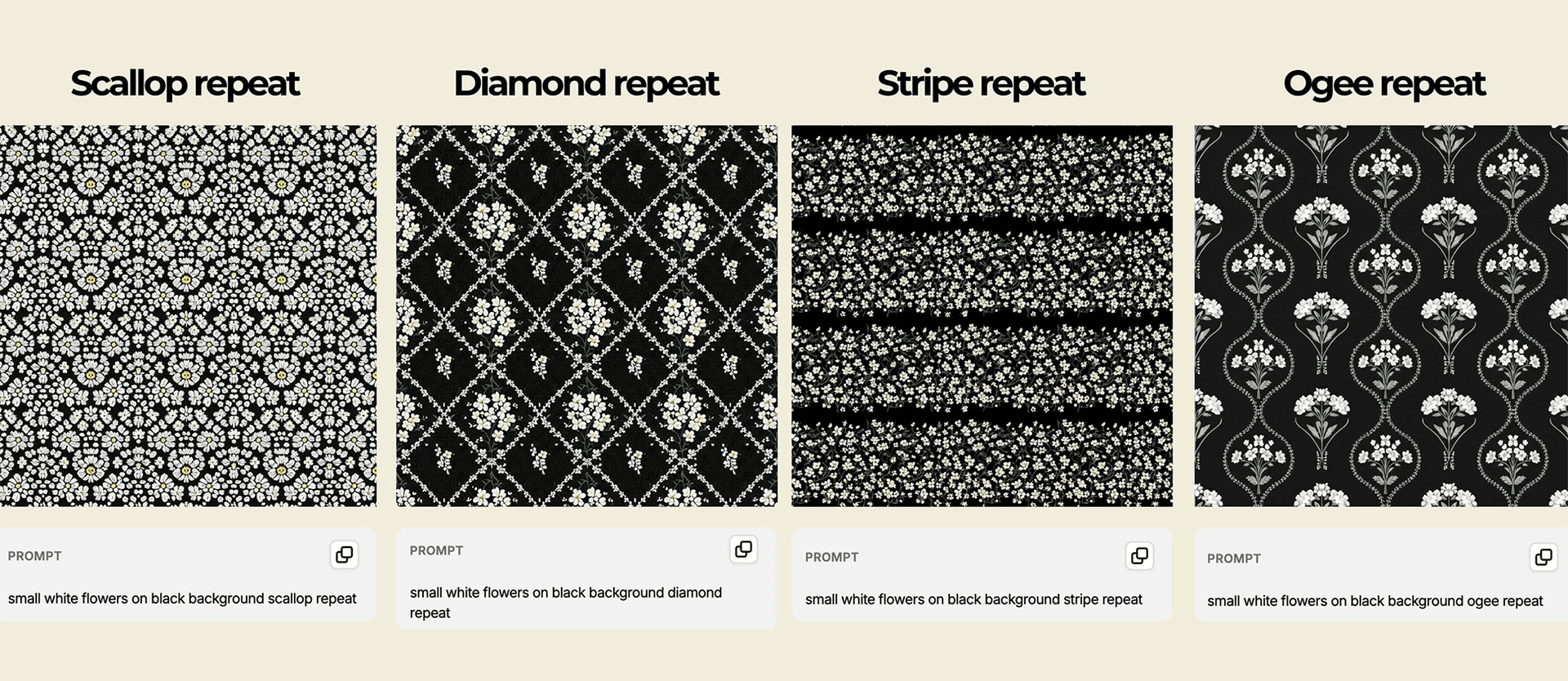
For example, you could prompt:
“Small white flowers on a black background, half-drop repeat.”
or:
“Small white flowers on a black background, ogee repeat.”
Using the same motifs and colors with a different repeat structure can give the pattern a completely different character, so experimenting with layouts is an easy way to explore more variations from the same idea.
If you don’t specify a repeat type, AI will choose a layout that best fits your prompt, often resulting in a tossed, half-drop or half-brick style composition.
Example Prompts
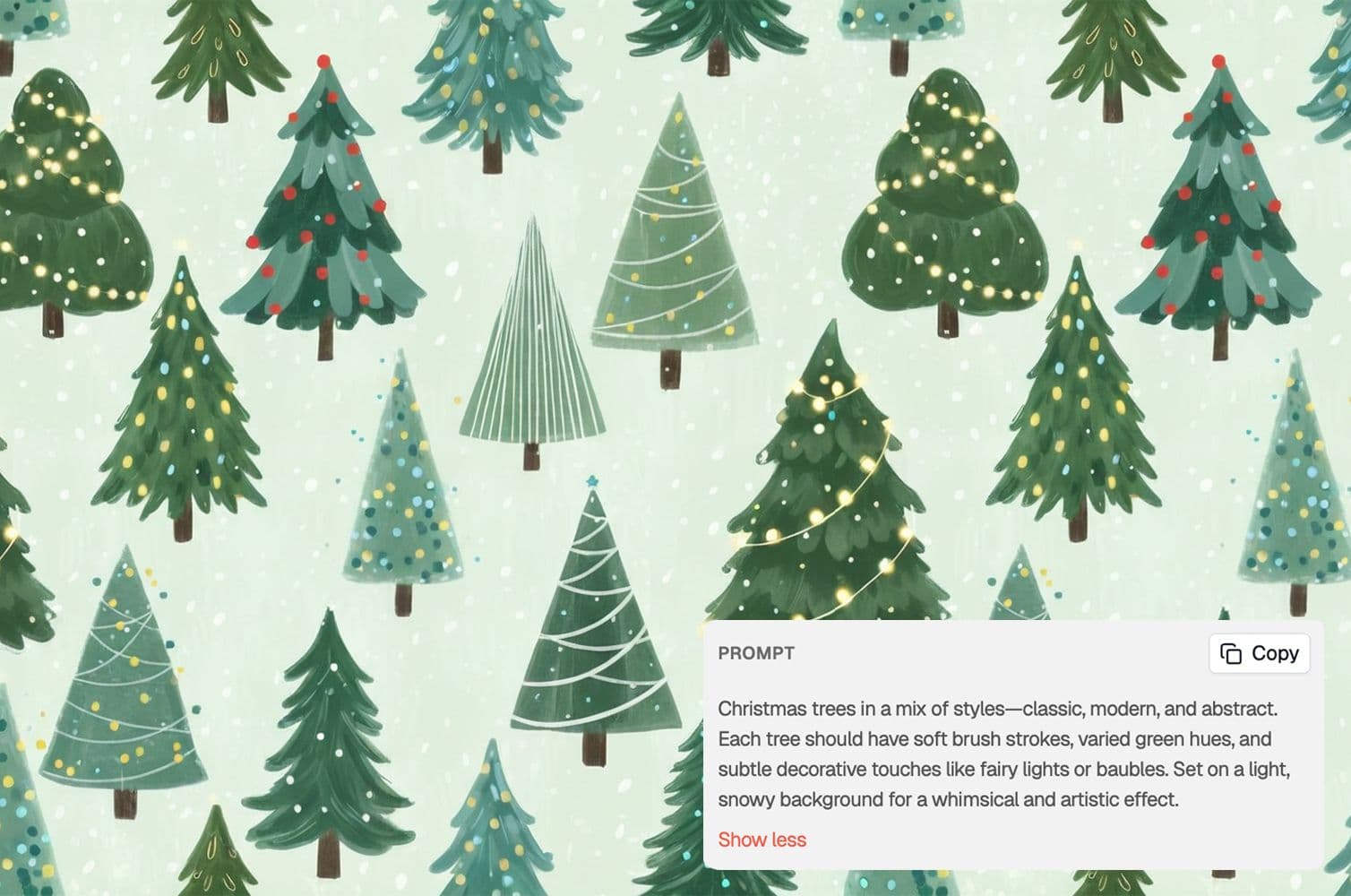
Simple prompt:
"Christmas trees"
Detailed prompt:
"Christmas trees. Each tree should have varied green hues, and subtle decorative touches like fairy lights or baubles."
Complex prompt:
"Christmas trees in a mix of styles—classic, modern, and abstract. Each tree should have soft brush strokes, varied green hues, and subtle decorative touches like fairy lights or baubles. Set on a light, snowy background for a whimsical and artistic effect."
Applying Styles
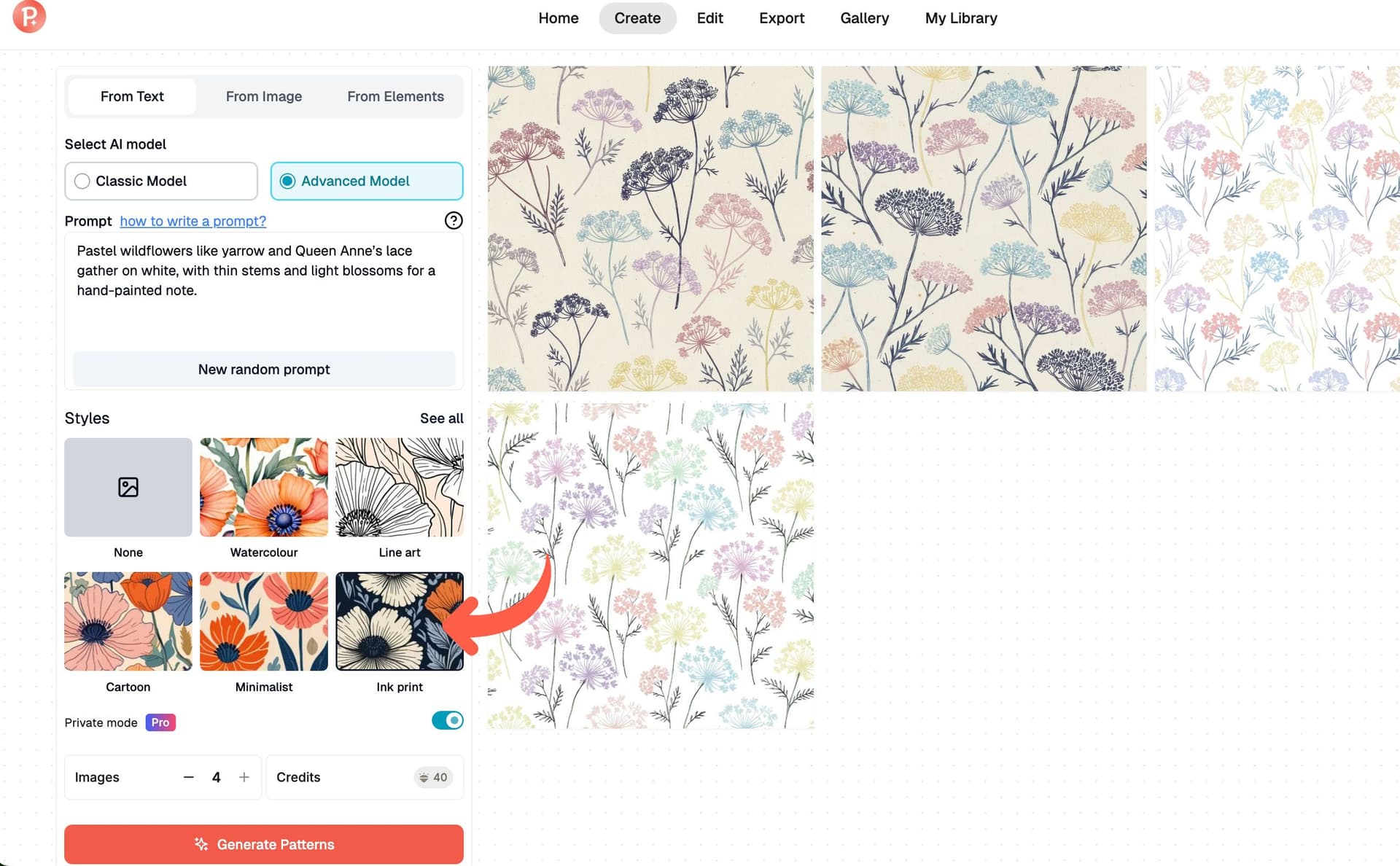
Patterned AI offers 14 artistic styles to transform your patterns, from popular options like Watercolor and Ink Print to creative choices such as Origami and Japanese Woodblock. Each style adds its own unique character to your design.
Style Tips:
- For maximum style impact: Keep prompts minimal. The simpler your prompt, the more pronounced the chosen style will be.
- Avoid style conflicts: Don't describe a style (like "watercolor") in your prompt if you plan to apply a different style afterward – they'll compete for dominance.
- For full control: Select "None" as your style and describe everything in your prompt instead.
Here's how different styles are applied to the same prompt look like:
Christmas trees. Each tree should have varied green hues, and subtle decorative touches like fairy lights or baubles.
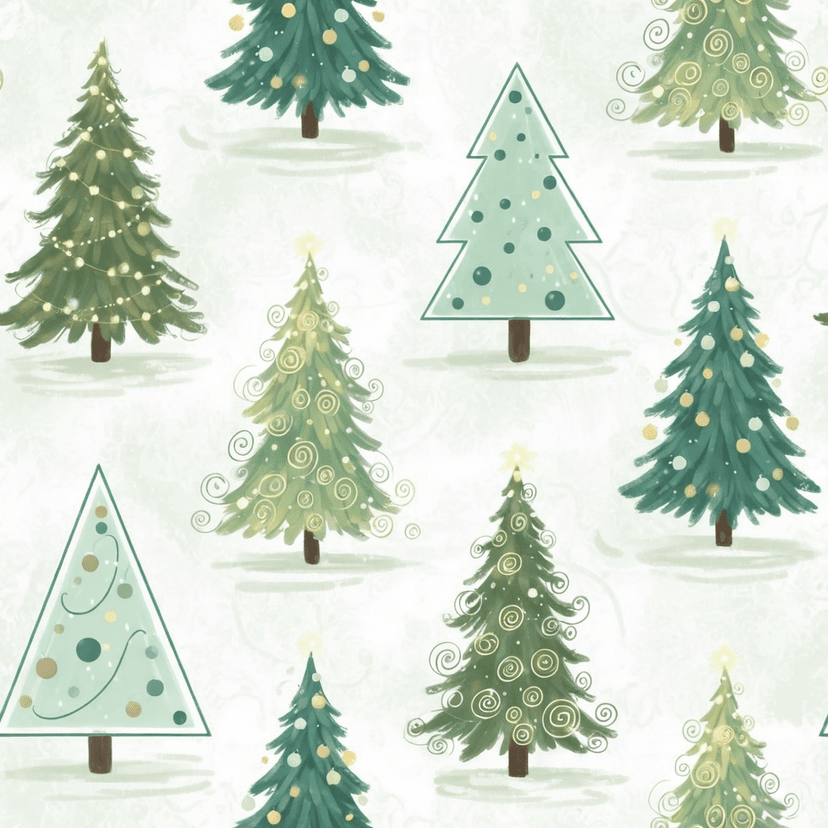
None
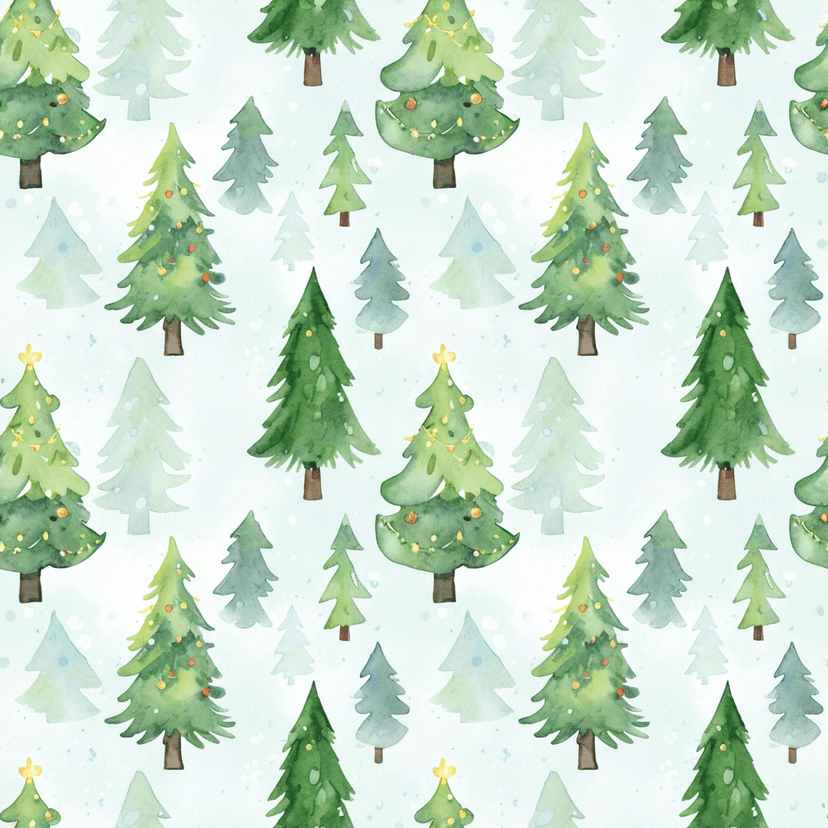
Watercolour
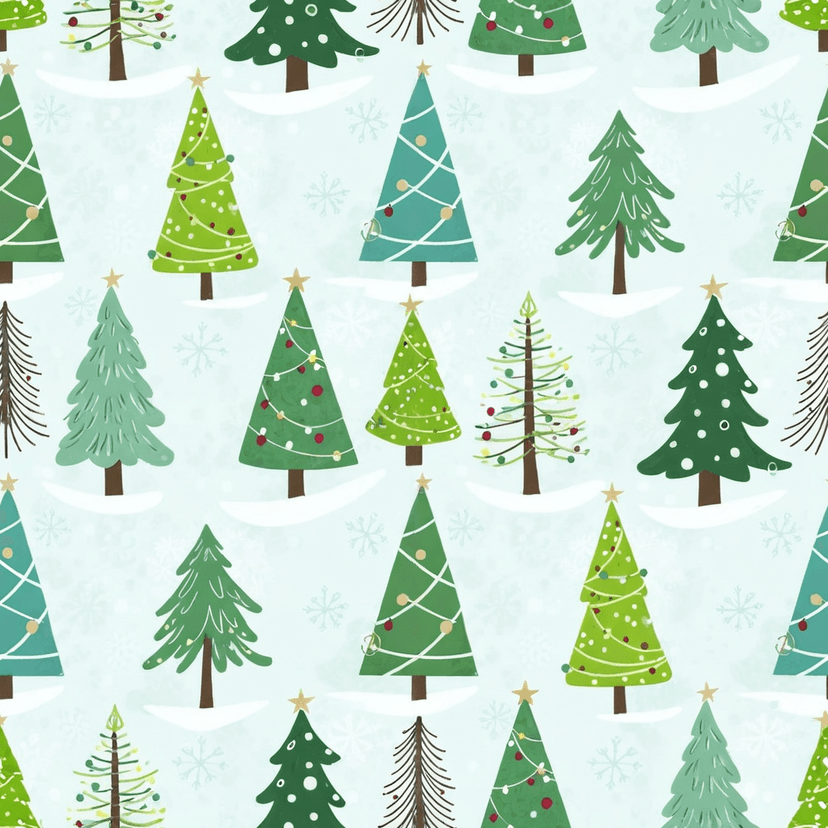
Minimalist
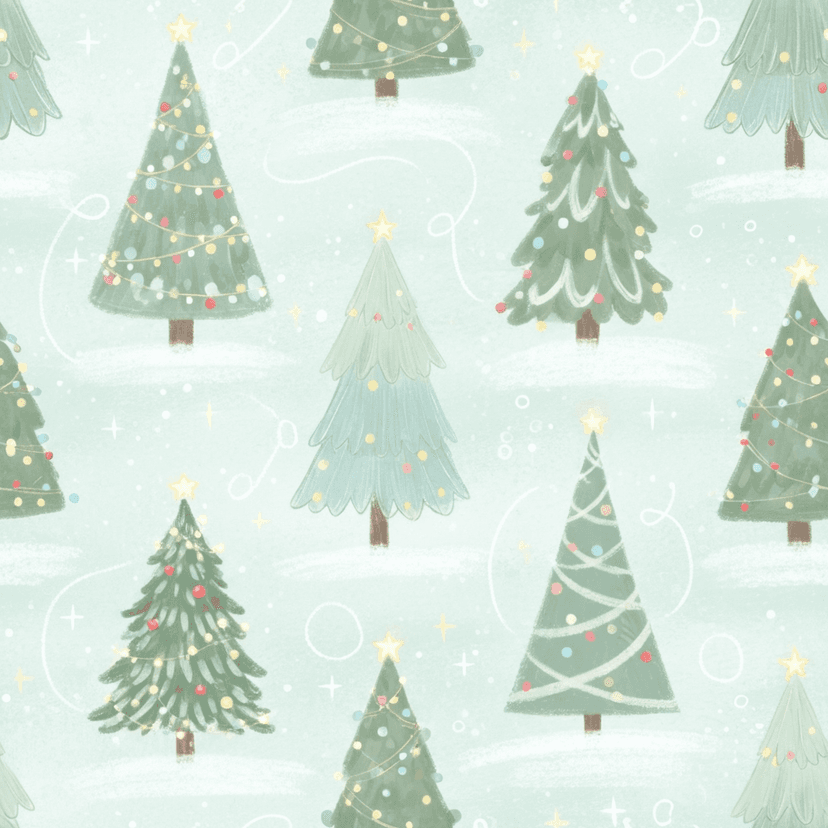
Pastel Pencils
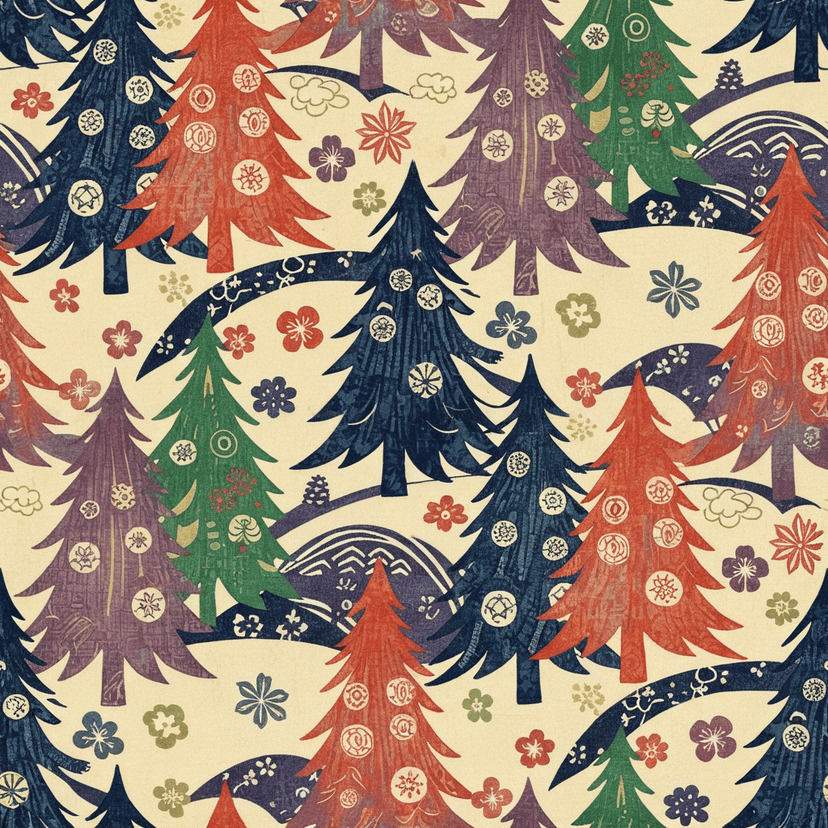
Japanese Woodblock
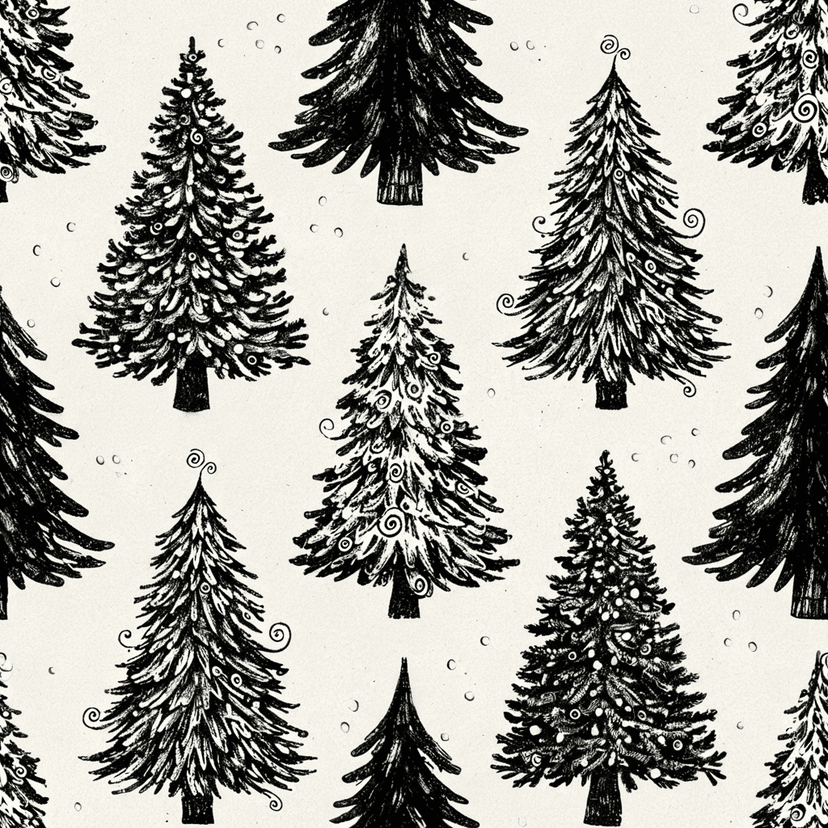
Ink print
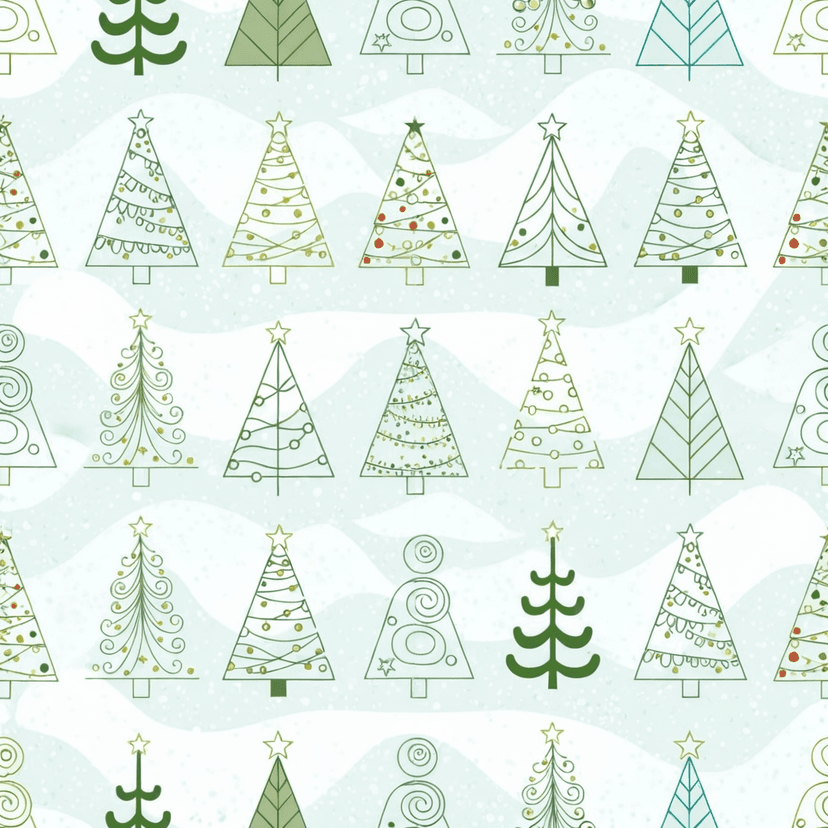
Line art
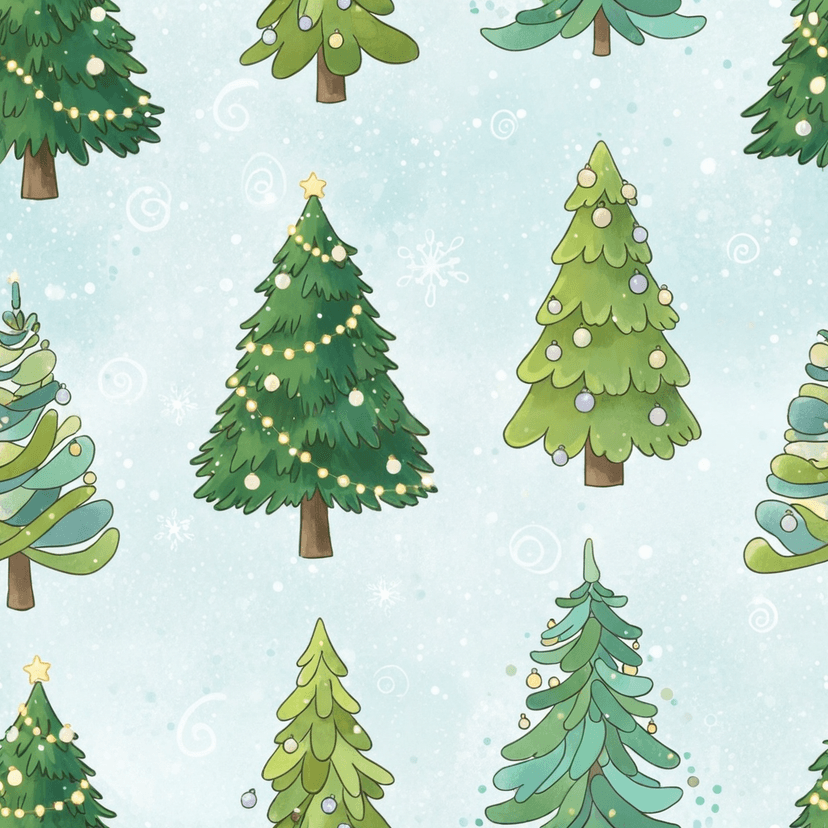
Cartoon
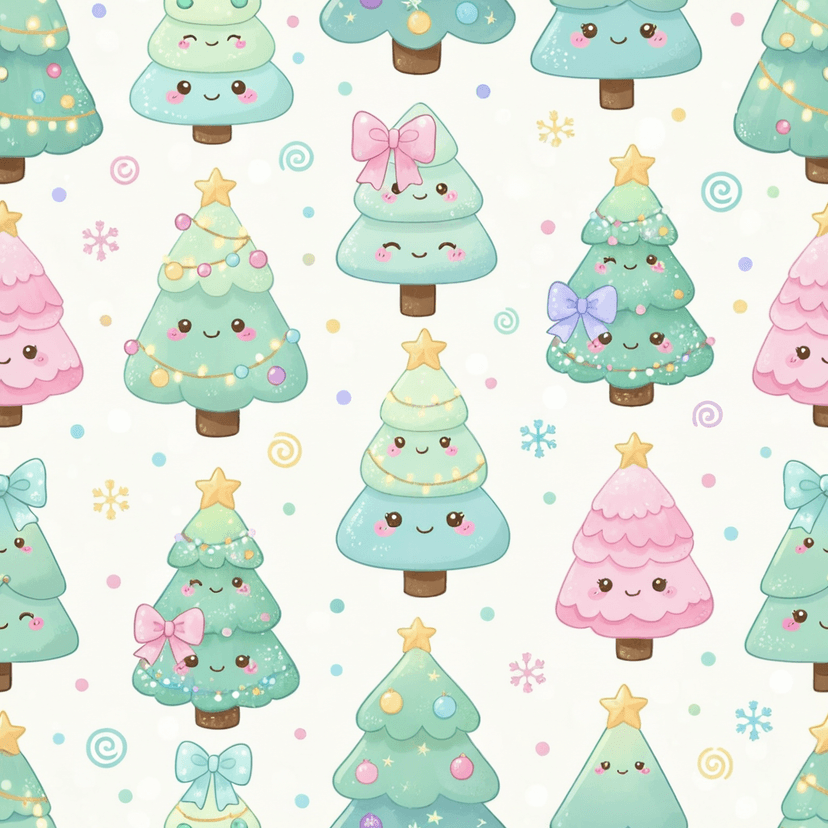
Cute
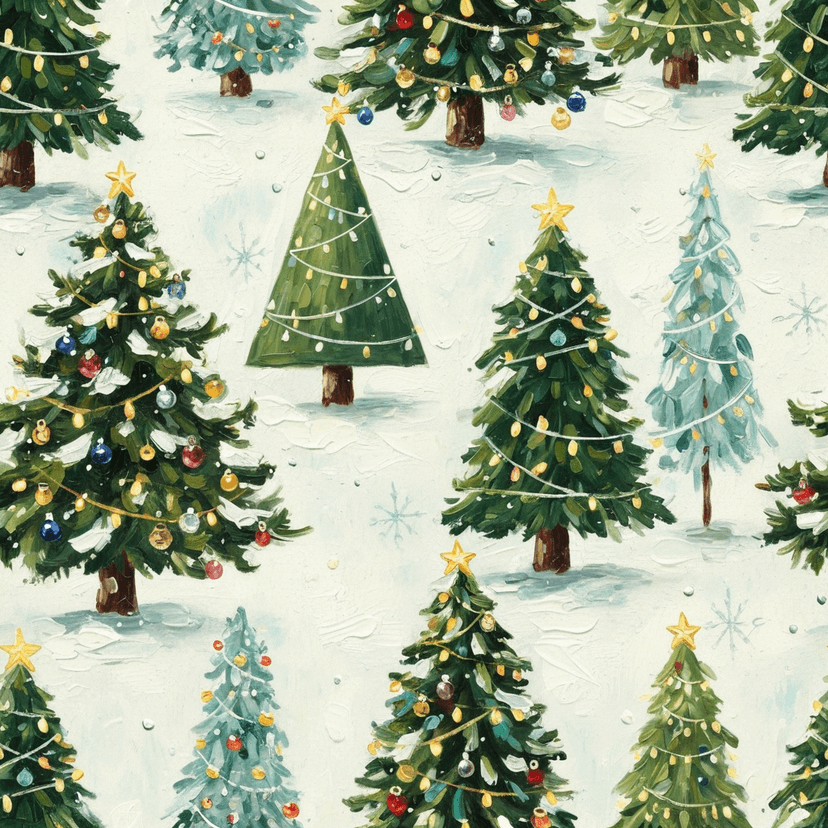
Oil painting
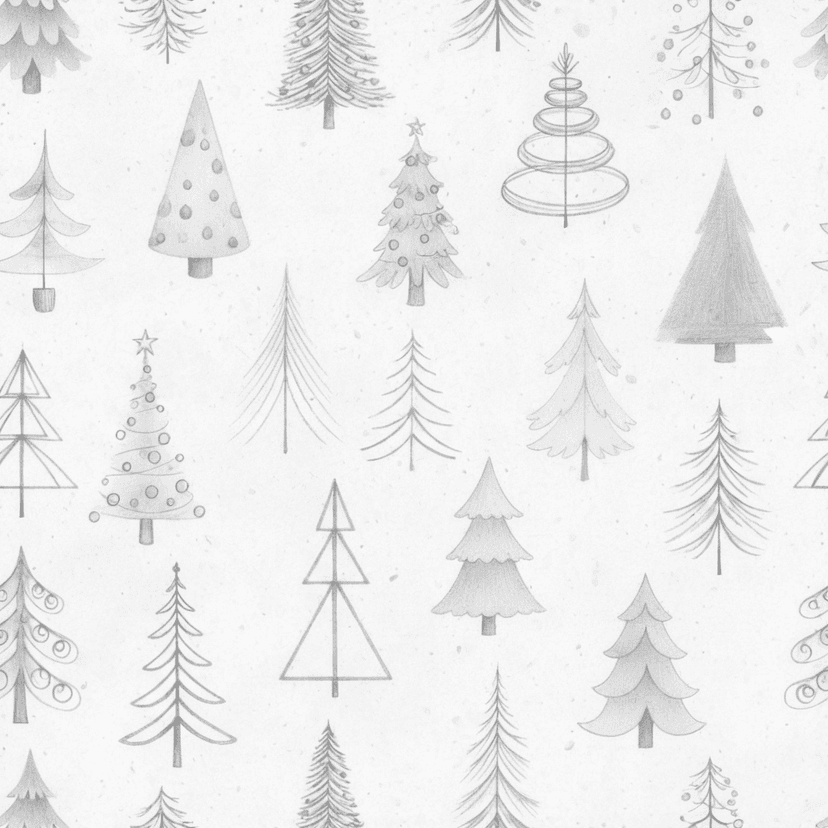
Pencil Drawing
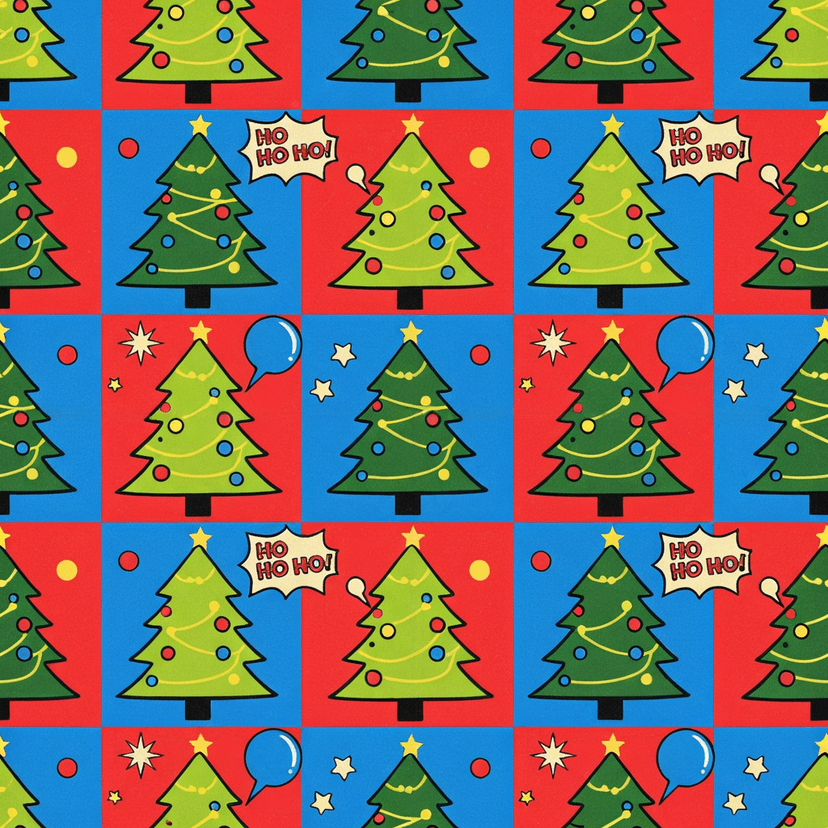
Pop art
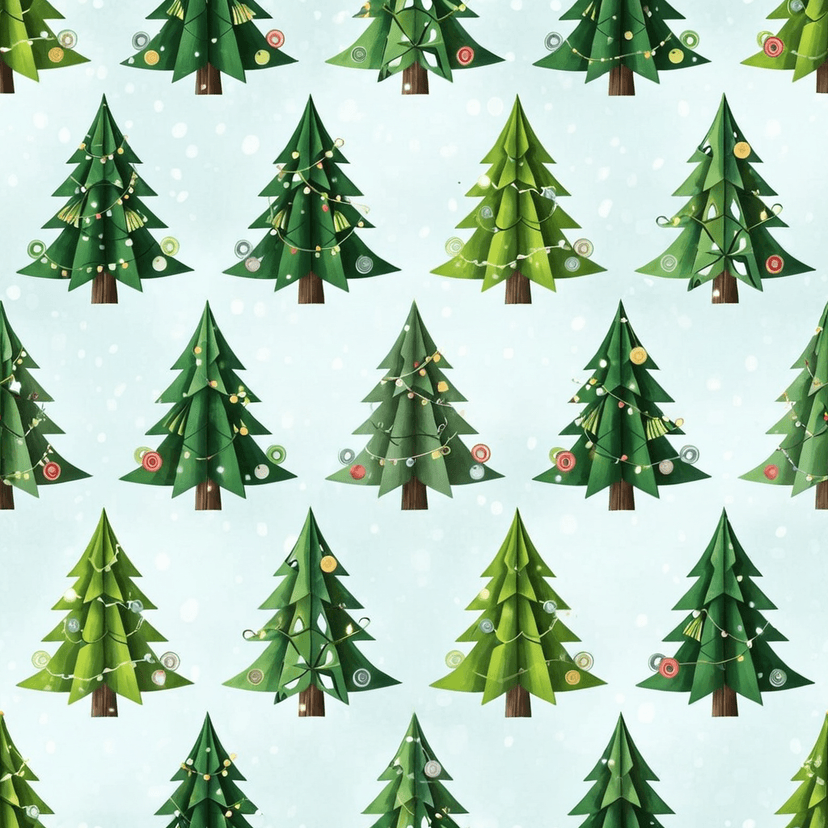
Origami
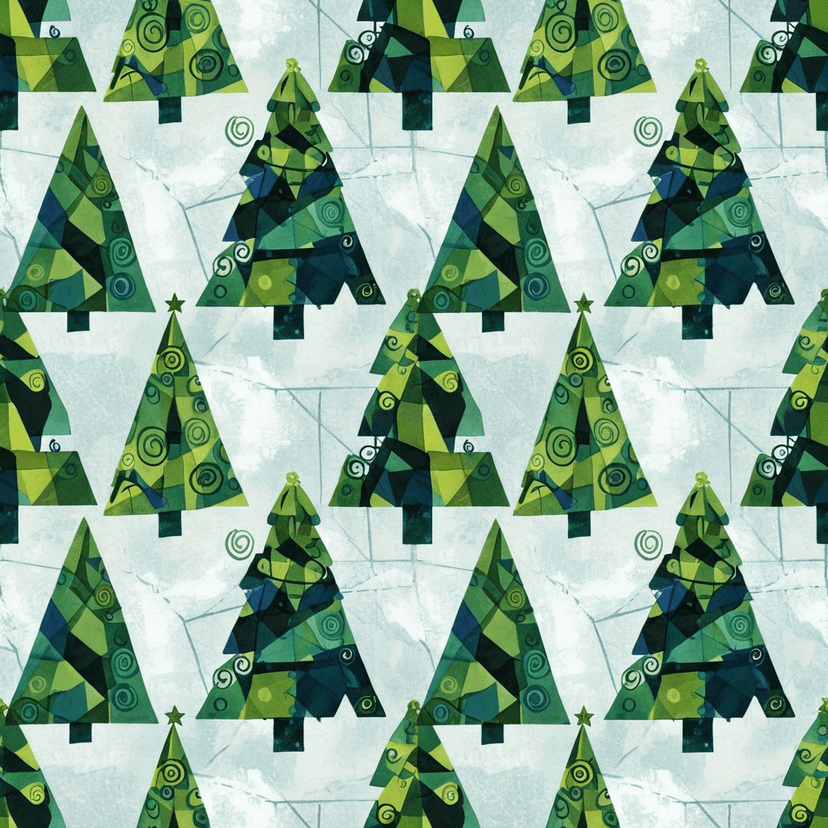
Cubism
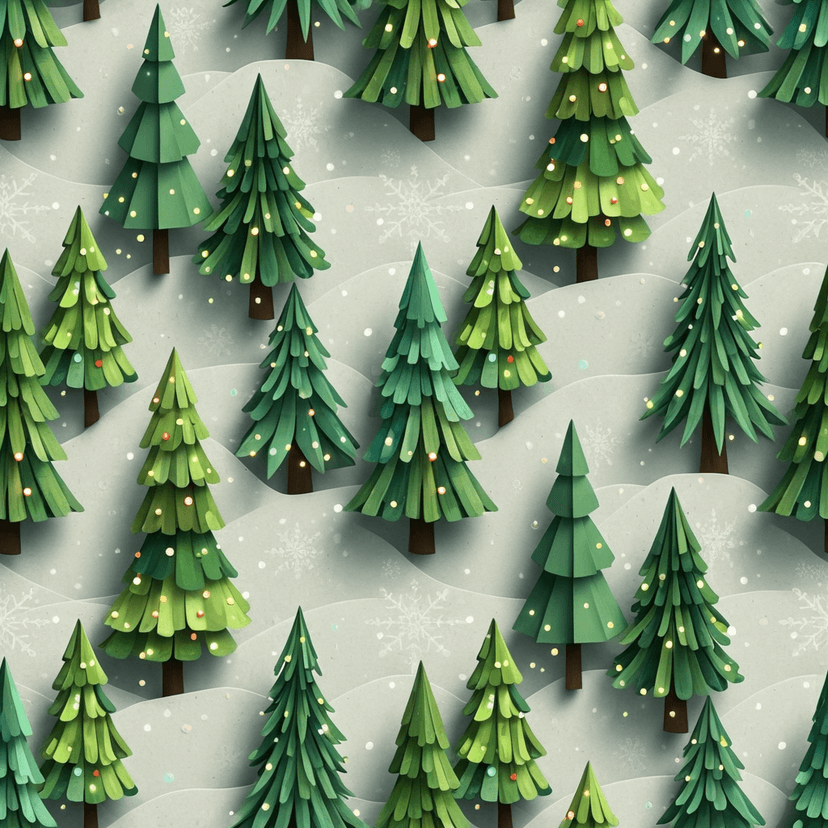
Papercut
When experimenting with the Create From Text, remember that iteration is normal; perfect results rarely come on the first try. Make small adjustments between generations, test different styles, or refine your patterns using the Restyle or Recolor tools for instant style or color variations.
Success with the From Text tool comes from writing descriptive prompts, using styles strategically, and iterating patiently. Start simple and layer in details until you achieve your perfect design. Happy pattern making!